
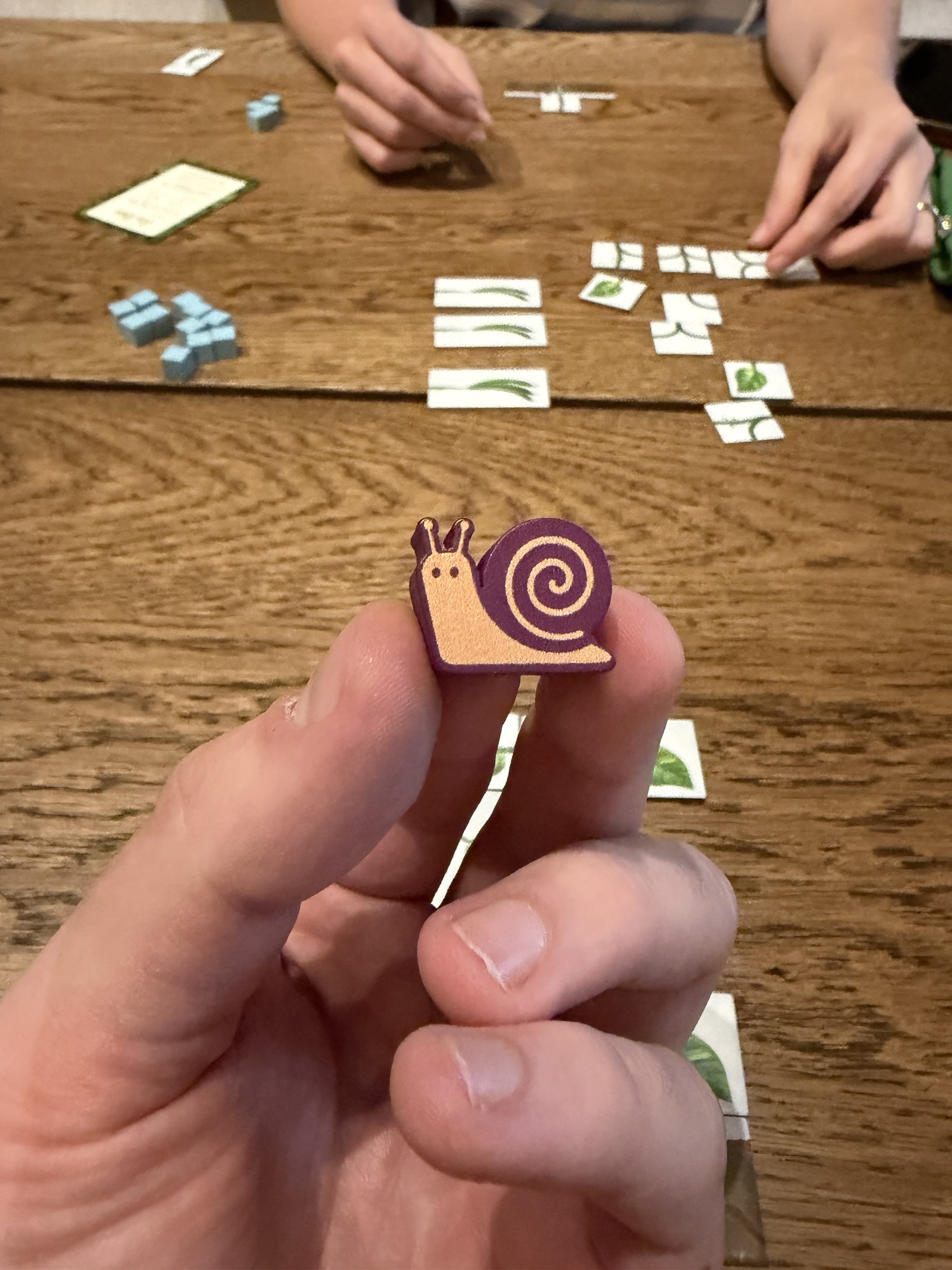
Designers / Publisher / Year: Bobby Powell / CavernWire Games / 2026
Player Count / Playtime: 1-6 Players / 20-30 Minutes
Genre / Type / Mechanics: Connections, Tile Placement, Puzzle
Expansions: Vine: Pumpkins and Beetles (2026)
Kickstarter Page: https://www.kickstarter.com/projects/cavernwiregames/vine
Vine is a light tile placement and engine building game about growing a beanstalk and producing the best harvest of beans. On your turn, you draw two plant tiles. One gets added to your own vine, while the other gets added to an opponent’s vine. As your plant grows, you are trying to create the right combination of stems and leaves to support beans, which ultimately provide your points.

The basic mechanics are really easy to pick up, but there are enough decisions involved in growing your plant that the game stays interesting. You are not simply trying to make the biggest vine possible. You have to think about where your plant is going, what it needs to produce beans, and what your opponent might do to interfere with it.
My favorite part of Vine is the ability to prune your plant.
It feels a little strange at first to intentionally cut apart something you have spent the game building, but pruning can actually be a really useful move. If part of your vine has grown in a bad direction or another player has left you with something you don’t want, you can cut it off and start rebuilding. Better yet, the game can actually reward you for doing it by giving you growth tokens for some of what you remove.
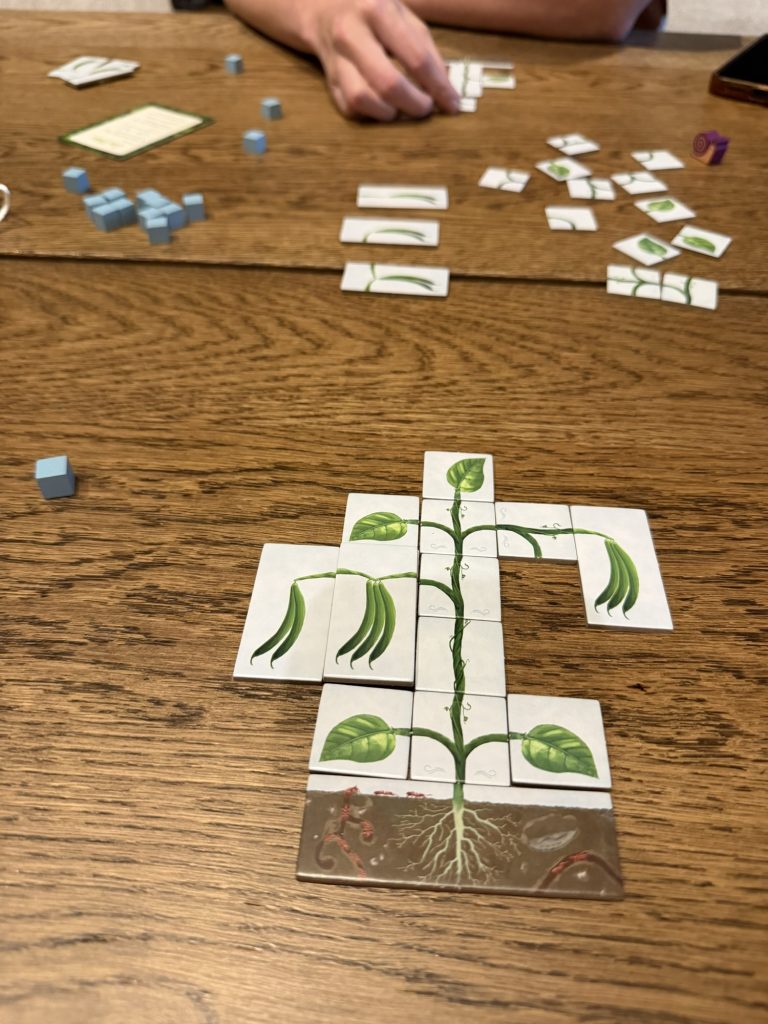
I really like that idea. Building your plant up and occasionally breaking it back down are both important parts of the game. A section of your vine doesn’t necessarily have to be permanent just because you built it. Sometimes getting rid of part of your plant opens up better options for what comes next.
That gives Vine a nice amount of strategy without making it feel complicated. There are meaningful choices to make, but turns move quickly and the rules never get in the way of the game itself.
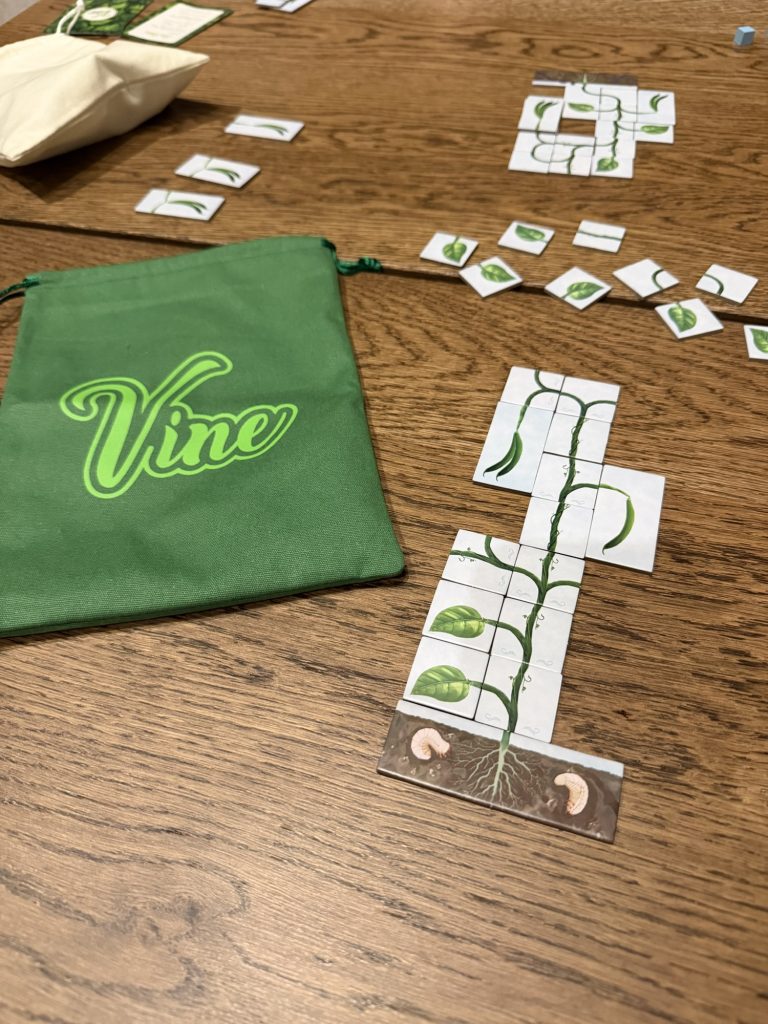
I’ve primarily played Vine at two players, and I have really enjoyed it at that player count. There is enough interaction that you are paying attention to what the other person is growing, but it never feels overly aggressive. Games are also quick enough that playing another one doesn’t feel like a big commitment.
Verdict: Vine is a simple, quick game with a clever idea at its center. Growing your plant is satisfying, but I especially like that the game isn’t only about constant expansion. Knowing when to prune, rebuild, and change direction is just as much a part of developing your vine as adding new pieces to it.
For me, though, it lands more in the “that was fun” category than the “I can’t wait to play again” category. I enjoyed the experience and think there are some clever ideas here, but overall, Vine is just okay for me.
Reviewed on 10/01/2026
Score Breakdown
| Category | Description | Score (1–10) |
|---|---|---|
| 1. Aesthetics & Components | Visual design, artwork, tactile quality, and overall presentation. | 6 |
| 2. Rules Clarity & Accessibility | Ease of learning, clarity of rulebook, setup time, and iconography. | 6.5 |
| 3. Strategic Depth | Amount of meaningful decision-making and long-term planning. | 8 |
| 4. Luck vs. Skill Balance | How fairly chance and skill coexist. | 7 |
| 5. Player Interaction | Engagement and social dynamics between players. | 6.5 |
| 6. Pacing & Downtime | Flow, engagement, and smoothness of play. | 7 |
| 7. Replayability | Longevity, variability, and continued appeal. | 6.5 |
| 8. Theme Integration | How well the mechanics and story fit the theme. | 8 |
| 9. Enjoyment & Emotional Impact | Pure fun factor—excitement, tension, satisfaction. | 6.75 |
| 10. Innovation & Uniqueness | Creativity, originality, and distinctiveness from other games. | 6.5 |
| Overall Mean Score | 6.88 / 10 | |