Designers / Publisher / Year: Dan Cassaro / Weast Coast / 2022
Player Count / Playtime: 2 Players / 15 mins
Genre / Type / Mechanics: Tile Placement, Abstract, Strategy, Connections, Snakes
Reminds Me Of: Carcassonne
Kickstarter Components: A signed and numbered, limited edition of the game!
If you’ve ever wished Carcassonne was a little meaner and a little quicker, Snakes of Wrath might be exactly what you’re looking for.

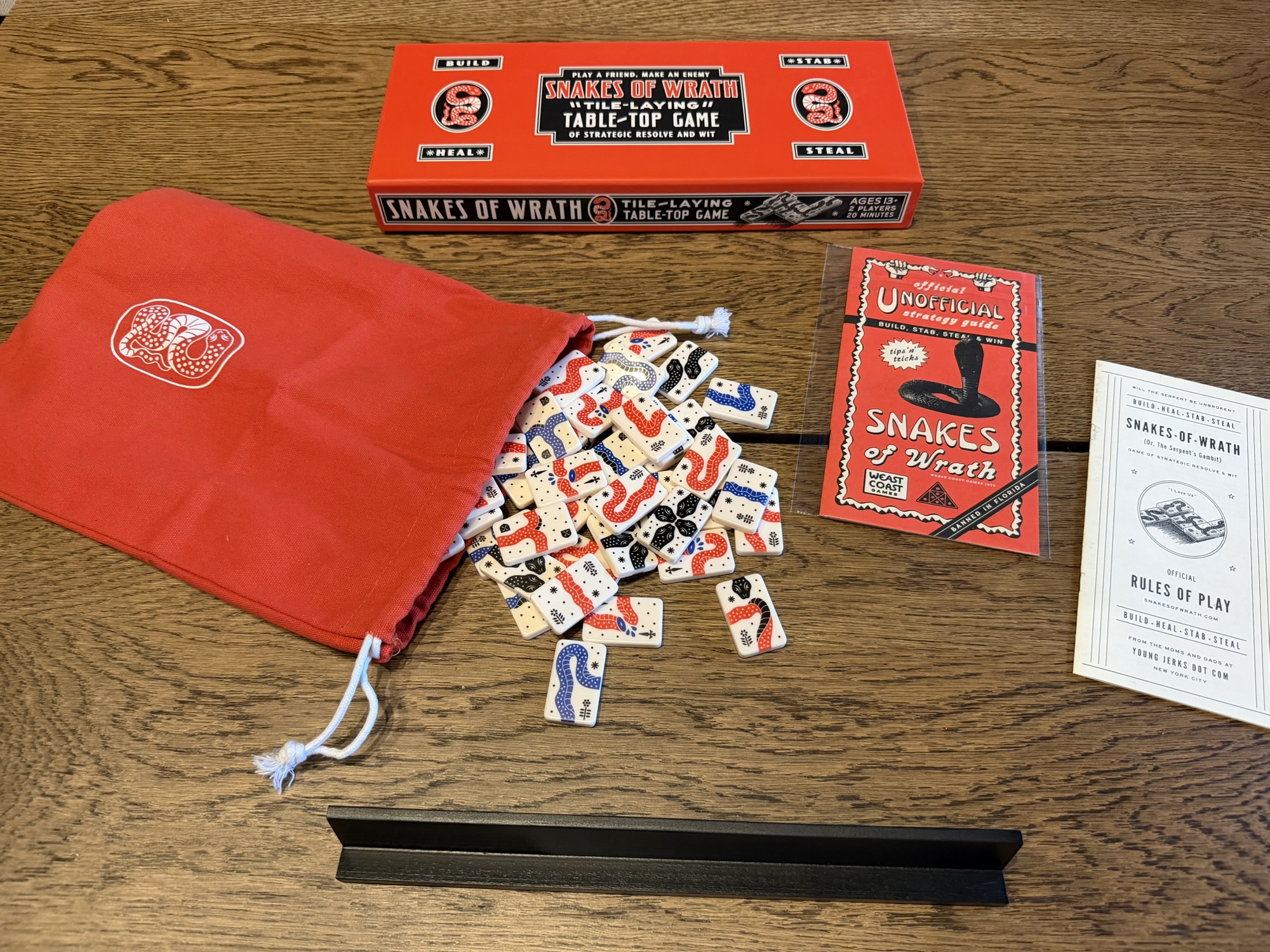
Players take turns placing domino-like landscape tiles to build a shared map of deserts, forests, mountains, and rivers. As the board grows, you’ll place your snake pieces to claim territories and score points. Unlike many peaceful tile-laying games, however, Snakes of Wrath encourages players to interfere with one another. Clever tile placement can cut off an opponent’s plans, steal opportunities, or leave their snakes stranded, making every decision feel just a bit more devious.

The comparison to Carcassonne is inevitable, but Snakes of Wrath carves out its own identity by streamlining the experience and adding more direct interaction. Games move quickly, the rules are easy to teach, and there’s just enough player conflict to keep everyone engaged without becoming overly punishing.
One of my favorite aspects of the game is its presentation. The chunky domino tiles feel great in your hands, the wooden snake pieces are charming, and the colorful artwork gives the game a warm, inviting aesthetic. It’s a game that looks as good on the table as it plays.
Verdict: Snakes of Wrath is a fantastic little two-player tile-laying game. It’s quick, easy to learn, visually appealing, and offers just the right amount of player interaction to keep things interesting. If you enjoy Carcassonne but want something a bit faster with a mischievous edge, this is an easy recommendation.
Reviewed on 07/05/2026
Score Breakdown
| Category | Description | Score (1–10) |
|---|---|---|
| 1. Aesthetics & Components | Visual design, artwork, tactile quality, and overall presentation. | 9 |
| 2. Rules Clarity & Accessibility | Ease of learning, clarity of rulebook, setup time, and iconography. | 9 |
| 3. Strategic Depth | Amount of meaningful decision-making and long-term planning. | 7.5 |
| 4. Luck vs. Skill Balance | How fairly chance and skill coexist. | 6 |
| 5. Player Interaction | Engagement and social dynamics between players. | 7 |
| 6. Pacing & Downtime | Flow, engagement, and smoothness of play. | 8 |
| 7. Replayability | Longevity, variability, and continued appeal. | 7 |
| 8. Theme Integration | How well the mechanics and story fit the theme. | 6 |
| 9. Enjoyment & Emotional Impact | Pure fun factor—excitement, tension, satisfaction. | 7 |
| 10. Innovation & Uniqueness | Creativity, originality, and distinctiveness from other games. | 6.5 |
| Overall Mean Score | 7.3 / 10 | |