Designers / Publisher / Year: Unknown / Public / ~1930
Player Count / Playtime: 2-6 Players / 30 mins
Genre / Type / Mechanics: Card Game, Set Collection, Solitaire, Real-time
Reminds Me Of: Dutch Blitz
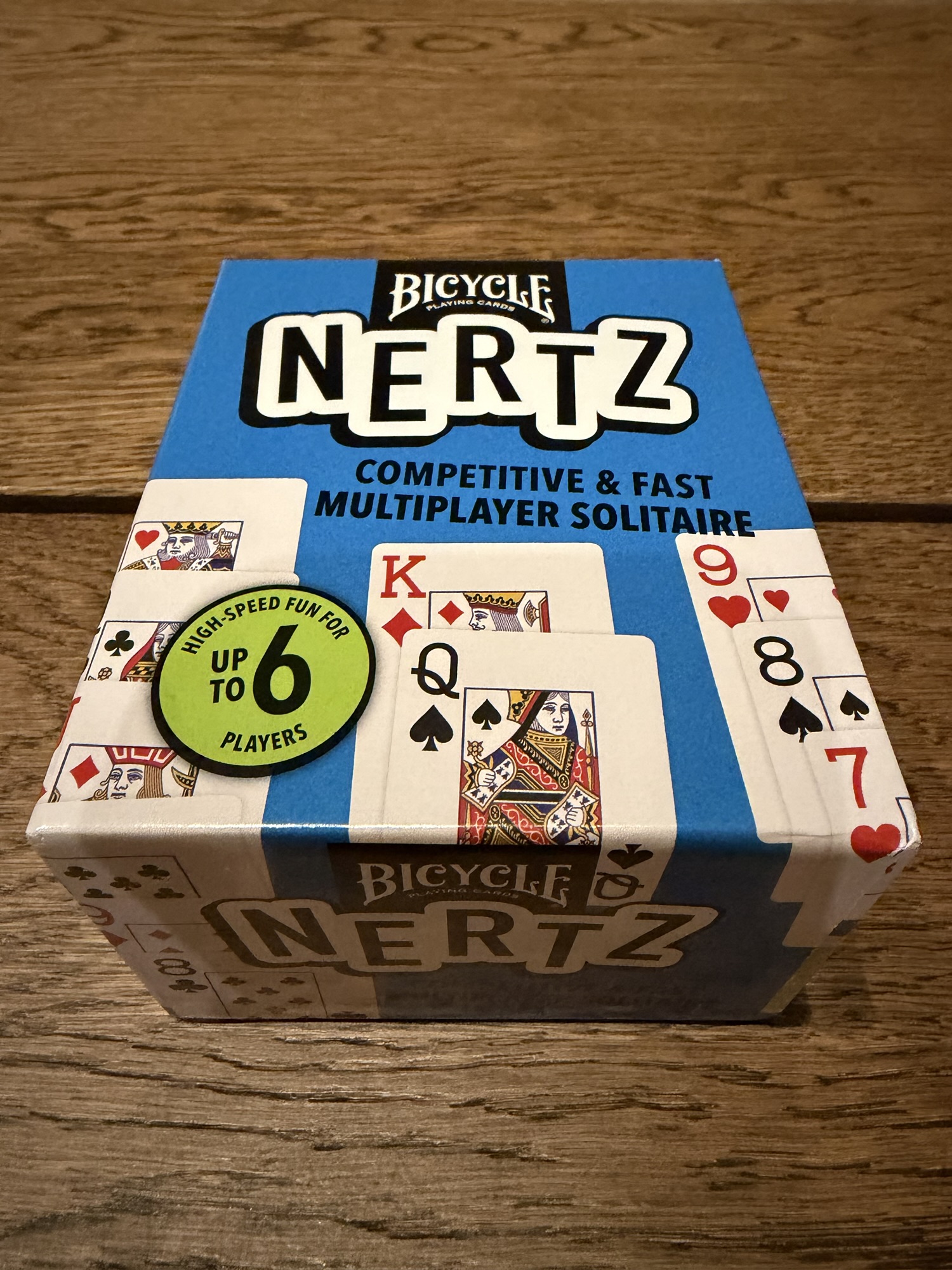
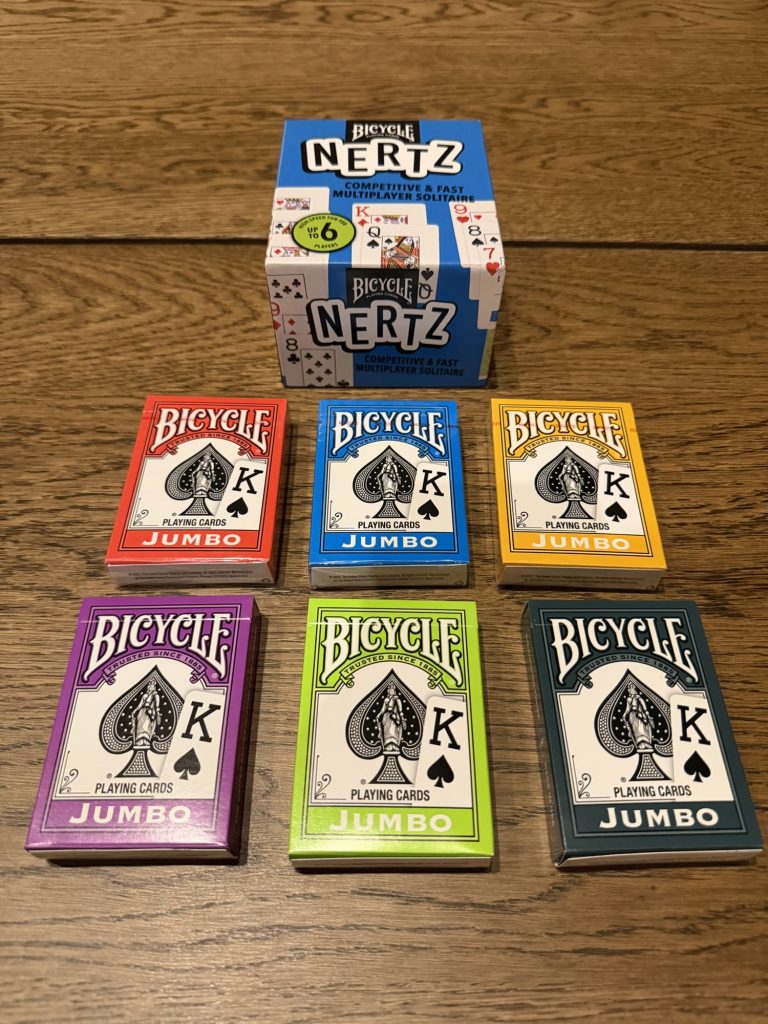
Nertz (or Nerts, Pounce, Racing Demon) is a fast-paced multiplayer card game that takes the familiar mechanics of solitaire and transforms them into a frantic race against your friends. While its exact origins are somewhat unclear, the game is generally considered a competitive descendant of Klondike Solitaire and other early multiplayer solitaire variants that have been played for generations under a variety of names. Unlike many modern games with elaborate components and extensive rulebooks, Nertz remains wonderfully simple. In fact, one of my favorite moments was opening a commercial Nertz box for the first time and discovering that it contained little more than six differently colored decks of standard playing cards. I laughed. After playing, I realized that was all the game ever needed.
In Nertz, each player has their own deck and personal tableau, similar to solitaire. Players race simultaneously to get rid of the cards in their Nertz pile by building sequences in their work piles and adding cards to shared foundation piles in the center of the table. There are no turns. Everyone plays at once, creating a constant scramble to spot opportunities before another player beats you to them. The round ends as soon as one player empties their Nertz pile, and points are awarded based on the cards successfully played and those remaining.
What makes Nertz stand out is its speed. From the moment the round begins, every player is fully engaged. There is no downtime, no talking, no waiting for your turn, and very little opportunity to plan several moves ahead. Instead, success comes from quickly recognizing patterns and reacting to the changing state of the table. That constant activity creates an energy that few traditional card games can match.
The most satisfying moments come when a single move triggers a cascade of additional plays. Moving one card can reveal another, which can immediately be played to a foundation pile, which then frees yet another card. These chains happen quickly and often feel incredibly rewarding, especially when they allow you to unload several cards in rapid succession.
However, concepts such as shared foundation piles, personal work piles, scoring, and simultaneous play can make the first explanation feel more complicated than the game actually is. Fortunately, once you see a round in action, everything tends to click into place quickly.
The pace can also be stressful. While I enjoy the speed and excitement, there is no denying that Nertz can make me a little anxious. The game constantly demands your attention, and it is easy to feel overwhelmed while trying to track multiple foundation piles and react before your opponents. For some players, that intensity is part of the appeal. Others may prefer a more relaxed experience.
Despite those few minimal cons, Nertz remains a very entertaining card game. It is inexpensive, highly accessible, and creates a level of excitement that is remarkable considering it can be played with nothing more than a few differently colored decks of cards. If you enjoy fast-paced games and do not mind a little chaos, Nertz is an easy recommendation. It turns solitaire into a race, and the result is exhilarating.
Verdict: It doesn’t score well because it’s a simple card game with standard decks of cards, but that doesn’t mean it isn’t a fun time!
Reviewed on 06/16/2026
Score Breakdown
| Category | Description | Score (1–10) |
|---|---|---|
| 1. Aesthetics & Components | Visual design, artwork, tactile quality, and overall presentation. | 5 |
| 2. Rules Clarity & Accessibility | Ease of learning, clarity of rulebook, setup time, and iconography. | 5 |
| 3. Strategic Depth | Amount of meaningful decision-making and long-term planning. | 3 |
| 4. Luck vs. Skill Balance | How fairly chance and skill coexist. | 5 |
| 5. Player Interaction | Engagement and social dynamics between players. | 5 |
| 6. Pacing & Downtime | Flow, engagement, and smoothness of play. | 10 |
| 7. Replayability | Longevity, variability, and continued appeal. | 7 |
| 8. Theme Integration | How well the mechanics and story fit the theme. | 1 |
| 9. Enjoyment & Emotional Impact | Pure fun factor—excitement, tension, satisfaction. | 7 |
| 10. Innovation & Uniqueness | Creativity, originality, and distinctiveness from other games. | 5 |
| Overall Mean Score | 5.3 / 10 | |