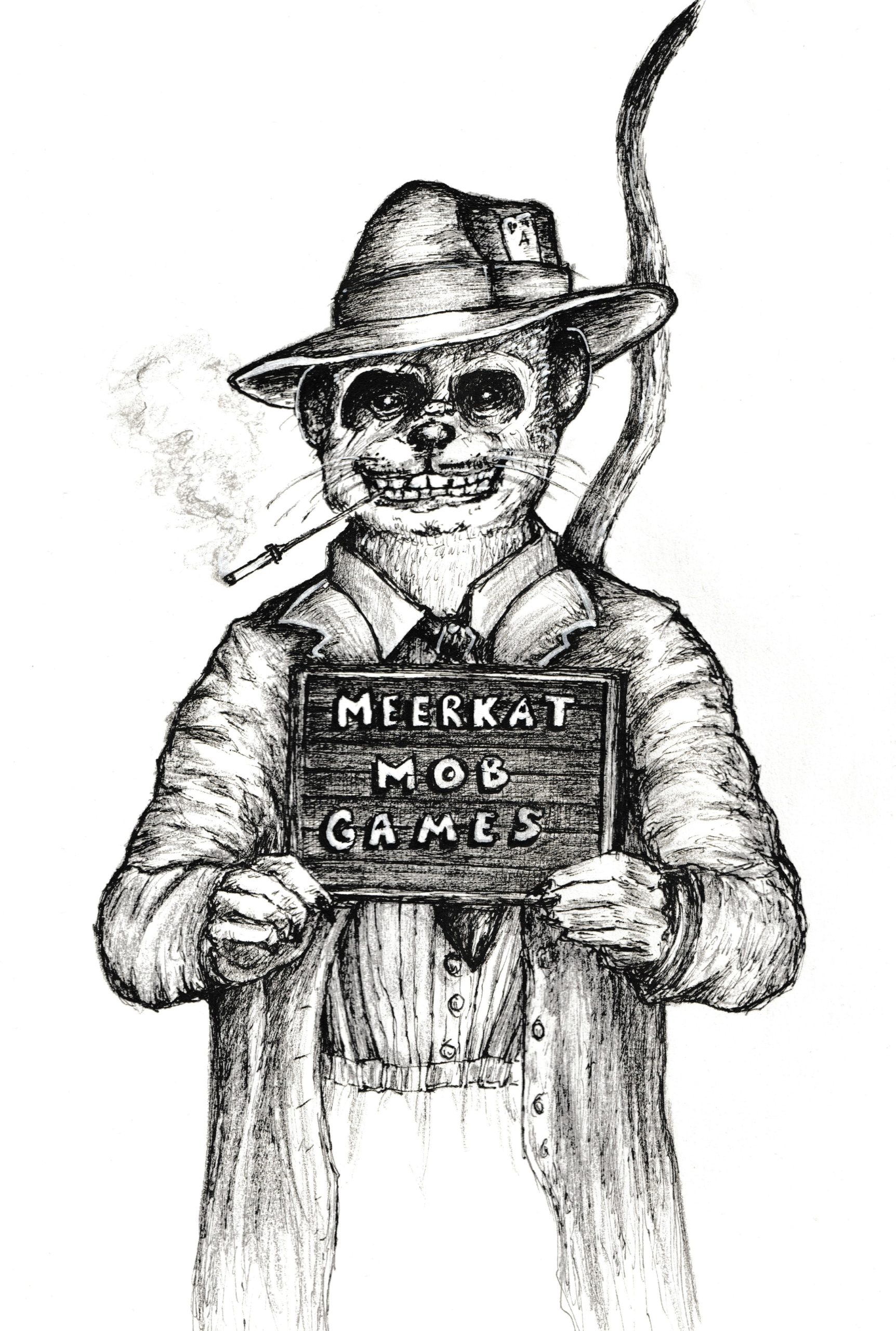
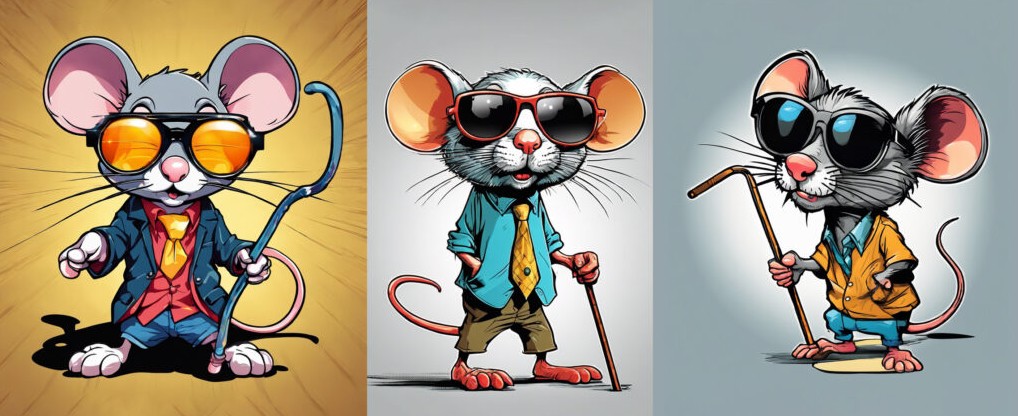
Designers / Publisher / Year: Brad Barton / Wooly Pelican / 2024
Player Count / Playtime: 2-5 Players / 30 mins
Genre / Type / Mechanics: Bluffing, Card Game, Mice, Cheese
Blind Mouse Bluff is a quick bluffing and deduction game where players try to figure out hidden information while misleading everyone else at the table. Players make claims, read reactions, and attempt to outsmart one another through conversation and subtle deception rather than complicated mechanics. The core gameplay revolves around bluffing convincingly, catching inconsistencies, and making smart guesses before your opponents do.
Blind Mouse Bluff surprised me with how naturally the bluffing works. Some bluffing games can feel forced or overly complicated, but this one creates situations where deception and deduction emerge organically from the gameplay itself. The concept comes together very smoothly once people start playing.
What I like most is how quick and approachable it feels. It is fast, easy to learn, and doesn’t demand a huge rules explanation before getting started. Even though the written rules were slightly difficult to fully understand at first, I actually appreciated how compact they were rather than being bloated with unnecessary detail. To learn the game, I would recommend watching a Youtube video, you’ll pick it up in 4 minutes.
Overall, Blind Mouse Bluff feels like a lightweight social bluffing game that gets to the point quickly and delivers exactly the kind of tense, entertaining interactions you want from the genre.
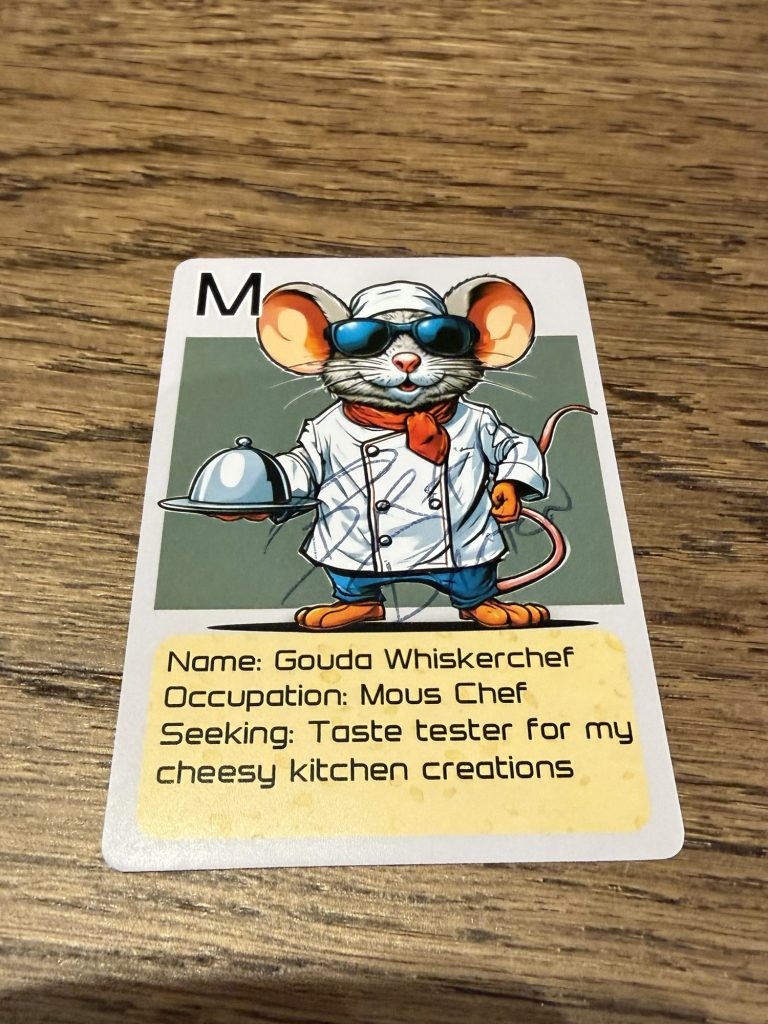
A side note: I picked this game up at PELIcon, a smaller board game convention in Houston, and met Brad, the designer. He seemed really nice and even signed his favorite mouse card in my copy. It’s always great to support smaller publishers and designers, and Brad gets my thumbs up!
Verdict: Blind Mouse Bluff is a fast and clever little bluffing game that keeps things simple while still creating genuinely fun moments of deception and deduction. A great lightweight social bluffing experience that works best with players who enjoy reading each other as much as playing the game itself.
Reviewed on 05/16/2026
Score Breakdown
| Category | Description | Score (1–10) |
|---|---|---|
| 1. Aesthetics & Components | Visual design, artwork, tactile quality, and overall presentation. | 5.5 |
| 2. Rules Clarity & Accessibility | Ease of learning, clarity of rulebook, setup time, and iconography. | 8 |
| 3. Strategic Depth | Amount of meaningful decision-making and long-term planning. | 6 |
| 4. Luck vs. Skill Balance | How fairly chance and skill coexist. | 5 |
| 5. Player Interaction | Engagement and social dynamics between players. | 8 |
| 6. Pacing & Downtime | Flow, engagement, and smoothness of play. | 10 |
| 7. Replayability | Longevity, variability, and continued appeal. | 8 |
| 8. Theme Integration | How well the mechanics and story fit the theme. | 6 |
| 9. Enjoyment & Emotional Impact | Pure fun factor—excitement, tension, satisfaction. | 7 |
| 10. Innovation & Uniqueness | Creativity, originality, and distinctiveness from other games. | 7 |
| Overall Mean Score | 7.05 / 10 | |