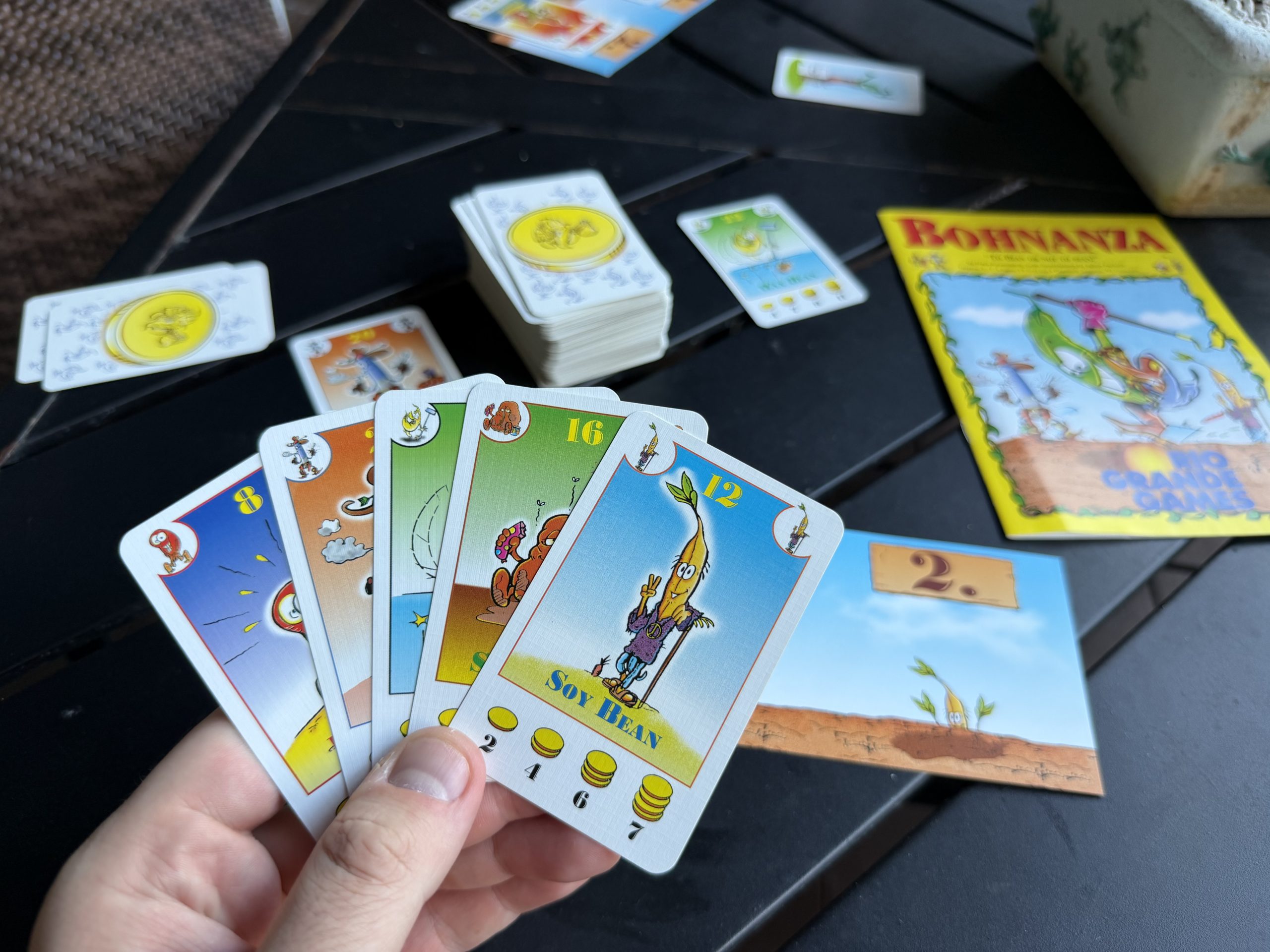
Designers / Publisher / Year: Uwe Rosenberg / AMIGO / 1997
Player Count / Playtime: 2-7 Players / 45 mins
Genre / Type / Mechanics: Card Game, Negotiation, Farming, Set Collection, Trading, Hand Management
Bohnanza is traditionally known as a trading-heavy bean farming card game designed for larger groups, but this review is specifically about the official 2-player variant included with the original game, not Bohnanza: The Duel. I have actually never played the standard 3+ player experience, so everything here is based entirely on the 2-player ruleset, which significantly changes how the game feels.
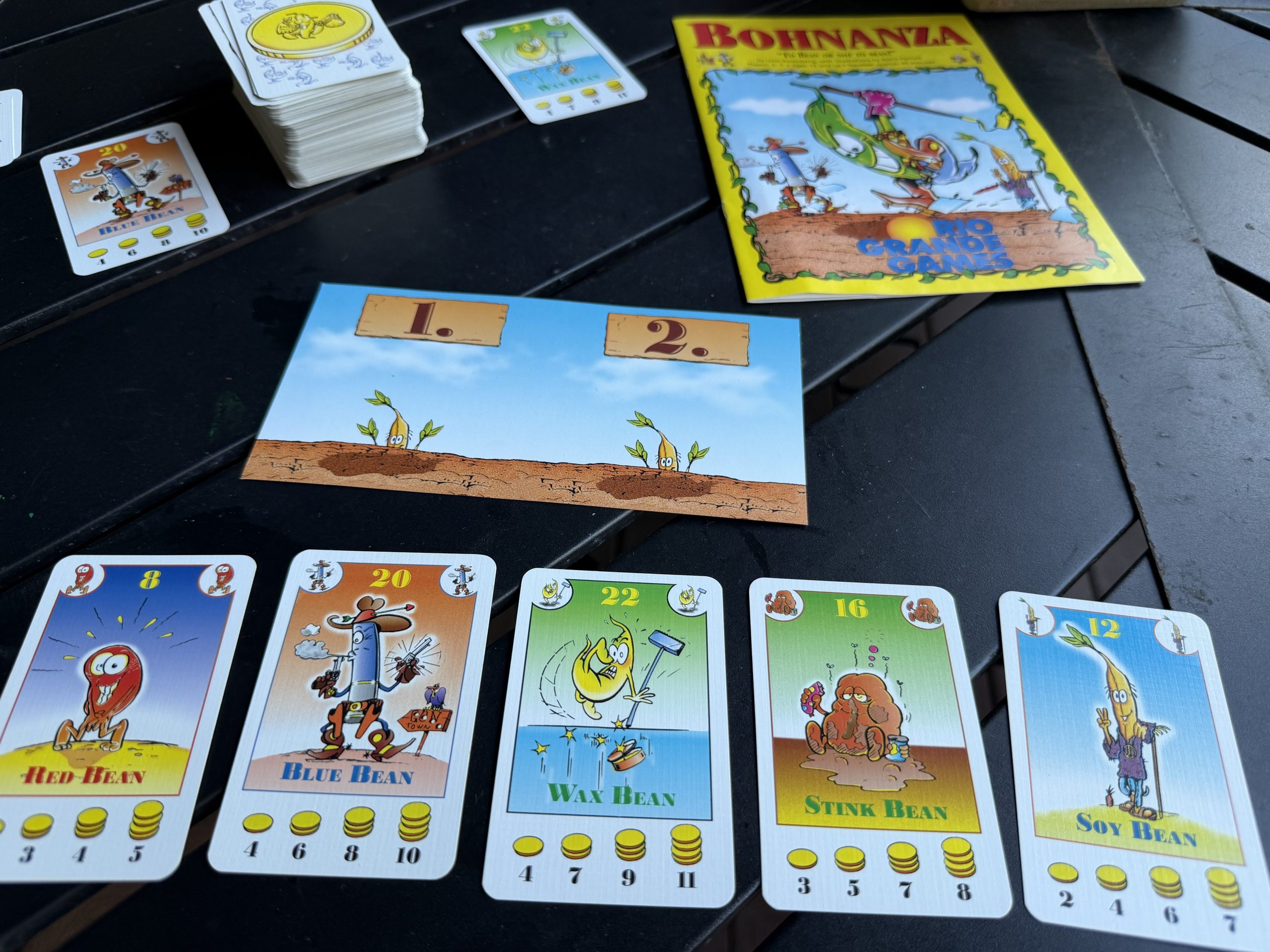
In the 2-player version, the game becomes much more tactical and controlled compared to the chaotic trading-focused multiplayer experience people usually associate with Bohnanza. Instead of constant negotiations with a full table, players are carefully managing fields, deciding which beans to keep, and strategically leaving unwanted beans as offers for the other player. The core idea of the game is still the same: plant matching beans in fields, harvest them efficiently for coins, and manage the awkward restriction that cards in your hand can never change order. That hand-ordering mechanic remains one of the smartest and most unique systems in card gaming because it forces long-term planning around cards you may not want to play yet.
What surprised me most is how well the game works as a dedicated two-player experience, even though many people strongly prefer the larger group version. Without a crowded table of negotiations, the game becomes less social and much more about efficiency, timing, and quietly disrupting your opponent’s plans. There is a very satisfying back-and-forth tension where you are constantly evaluating whether to help yourself or dump problems onto the other player.
Another reason I was excited to try Bohnanza is because it was designed by Uwe Rosenberg, who is probably my favorite board game designer overall. Rosenberg is known for creating thoughtful resource-management and farming-style games like Agricola, A Feast for Odin, and Patchwork, but Bohnanza represents an earlier and much lighter part of his design history. Even here, though, you can already see some of the ideas that make his games so compelling: careful planning, efficiency puzzles, and forcing players to work around limitations rather than simply doing whatever they want. The hand-order mechanic especially feels very “Uwe” in retrospect, turning a simple restriction into the entire strategic backbone of the game.
What I appreciate most about the 2-player version is how easy it is to get to the table. Setup is simple, turns move quickly, and the game creates meaningful decisions without becoming overwhelming or overly complicated. It works surprisingly well as a relaxed 2-player card game while still having enough interaction and tension to stay interesting. Even though I know the larger group version is what most people think of when they talk about Bohnanza, I genuinely enjoyed this 2-player format quite a bit. One day, though, I really do hope to finally try the full multiplayer experience just to see how different the game feels with all the negotiation and table politics added back in.
Reviewed on 05/27/2026
Score Breakdown
| Category | Description | Score (1–10) |
|---|---|---|
| 1. Aesthetics & Components | Visual design, artwork, tactile quality, and overall presentation. | 7 |
| 2. Rules Clarity & Accessibility | Ease of learning, clarity of rulebook, setup time, and iconography. | 5.5 |
| 3. Strategic Depth | Amount of meaningful decision-making and long-term planning. | 6 |
| 4. Luck vs. Skill Balance | How fairly chance and skill coexist. | 6 |
| 5. Player Interaction | Engagement and social dynamics between players. | 7 |
| 6. Pacing & Downtime | Flow, engagement, and smoothness of play. | 8 |
| 7. Replayability | Longevity, variability, and continued appeal. | 7 |
| 8. Theme Integration | How well the mechanics and story fit the theme. | 6 |
| 9. Enjoyment & Emotional Impact | Pure fun factor—excitement, tension, satisfaction. | 7 |
| 10. Innovation & Uniqueness | Creativity, originality, and distinctiveness from other games. | 7 |
| Overall Mean Score | 6.65 / 10 | |