
Designers / Publisher / Year: Alex Hague, Jon Perry, Justin Vickers / CMYK / 2022
Player Count / Playtime: 1-4 Players / 30 mins
Genre / Type / Mechanics: Dice Rolling, Push Your Luck, Card Game, Dice, Animals
Reminds Me Of: Dairyman (2016)
Spots is a game where, as the publisher puts it best, “dogs have spots, dice have spots, place dice to score points.”
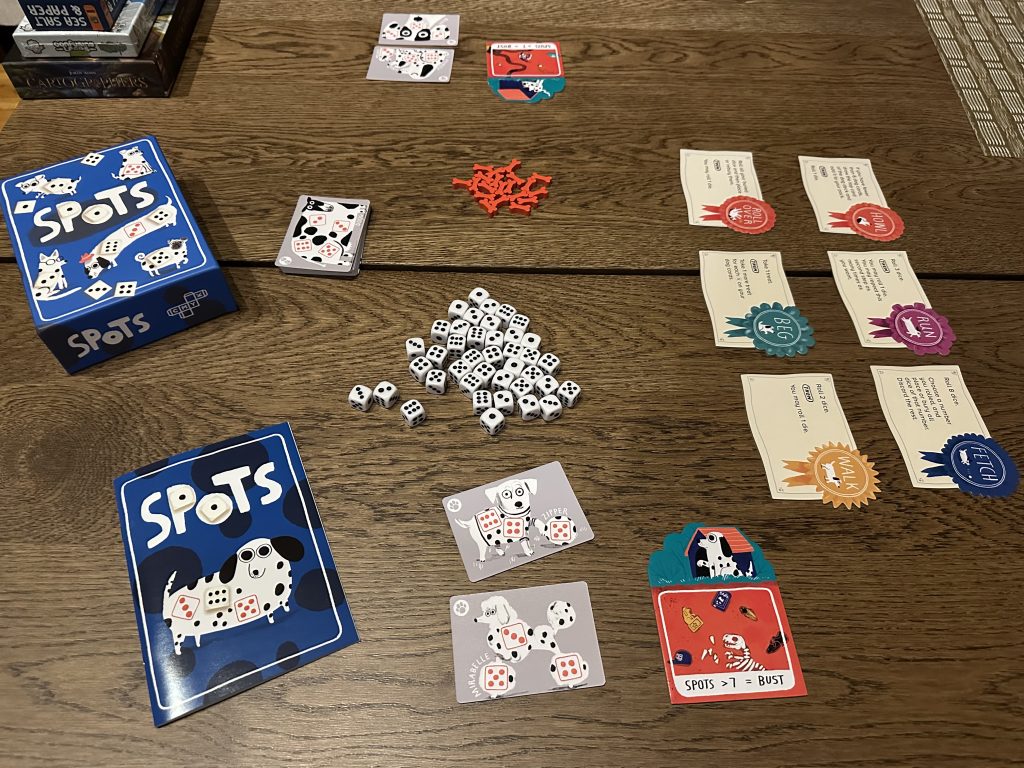
It’s incredibly easy to learn and hits the table fast, making it a perfect filler game or something to play when you don’t have time for a heavier title. On your turn, you’ll choose an action, usually rolling dice, and then try to place those dice onto your dog cards by matching the values to the empty “spots.” The catch is that if you can’t place a die, it goes onto your yard, and too many dice in your yard means you bust. When that happens, you lose progress for the round, so there’s always that push-your-luck tension of whether to keep rolling or play it safe.
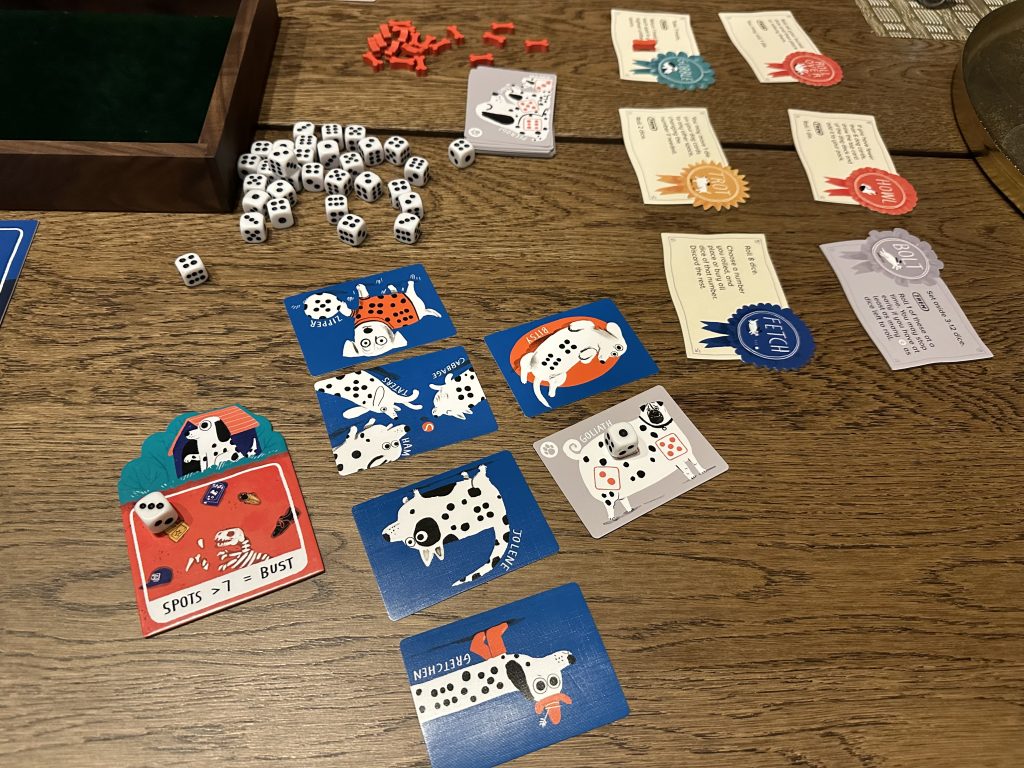
You can also take other actions like burying dice to clear your yard or digging them back up, which adds a bit of strategy beyond just rolling and hoping for the best. Once you completely fill a dog card, you score it and work toward collecting a set number of dogs to win the game.
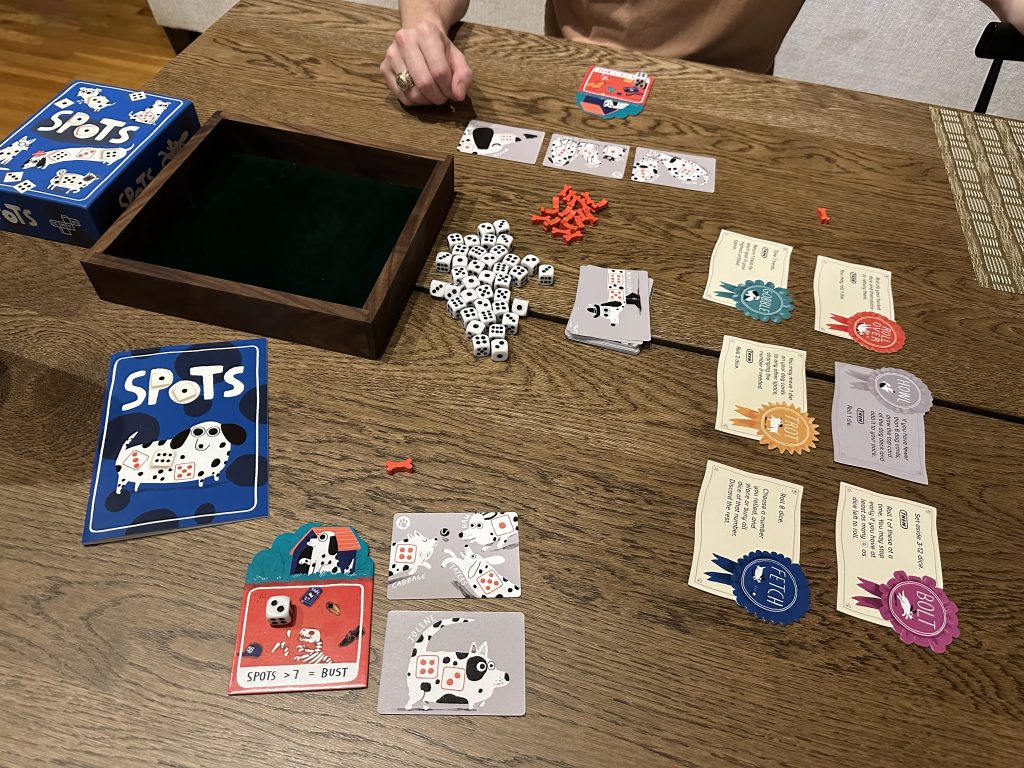
One of the best parts is the variability. You can swap out the set of six dog cards in play, each with different abilities, so every game feels a little different. Some dogs reward certain play styles, while others help mitigate risk, which keeps things fresh without adding complexity.
I’ve had a lot of fun playing this with my group. It’s quick, light, and always gets a few laughs. The push-your-luck element keeps everyone engaged, even in such a simple system. Plus, the dog cards are genuinely cute, which just adds to the charm.
Verdict: Not every game needs to be an epic…sometimes you just want something quick, fun, and full of cute dogs. Spots delivers exactly that, every time.
Reviewed on 04/19/2026
Score Breakdown
| Category | Description | Score (1–10) |
|---|---|---|
| 1. Aesthetics & Components | Visual design, artwork, tactile quality, and overall presentation. | 7 |
| 2. Rules Clarity & Accessibility | Ease of learning, clarity of rulebook, setup time, and iconography. | 9 |
| 3. Strategic Depth | Amount of meaningful decision-making and long-term planning. | 4 |
| 4. Luck vs. Skill Balance | How fairly chance and skill coexist. | 5 |
| 5. Player Interaction | Engagement and social dynamics between players. | 5 |
| 6. Pacing & Downtime | Flow, engagement, and smoothness of play. | 9 |
| 7. Replayability | Longevity, variability, and continued appeal. | 7 |
| 8. Theme Integration | How well the mechanics and story fit the theme. | 7 |
| 9. Enjoyment & Emotional Impact | Pure fun factor—excitement, tension, satisfaction. | 7 |
| 10. Innovation & Uniqueness | Creativity, originality, and distinctiveness from other games. | 5 |
| Overall Mean Score | 6.5 / 10 | |
One response to “Spots”
[…] job of keeping each game feeling a little different. In that sense, Cubitos reminds me a bit of Spots: rolling handfuls of dice, deciding whether to push your luck, and trying to maximize every turn. […]