
Designers / Publisher / Year: Thomas Demuth / Self Published / 2026
Player Count / Playtime: 2-5 Players / 30-60 Minutes
Genre / Type / Mechanics: Racing, Trains, Transportation, Hand Management, Take That, Real Time
Kickstarter Page: https://www.kickstarter.com/projects/thomulate/visit-nyc-the-subway-racing-game
Visit NYC Store: https://www.visitnycgame.store/
Sometimes a game doesn’t need a dozen interconnected mechanics or a massive decision space to keep me coming back. Sometimes I just want to draw some cards, mess with my opponent, and race across New York City.
Visit NYC: The Subway Racing Game has been one of those games for me.
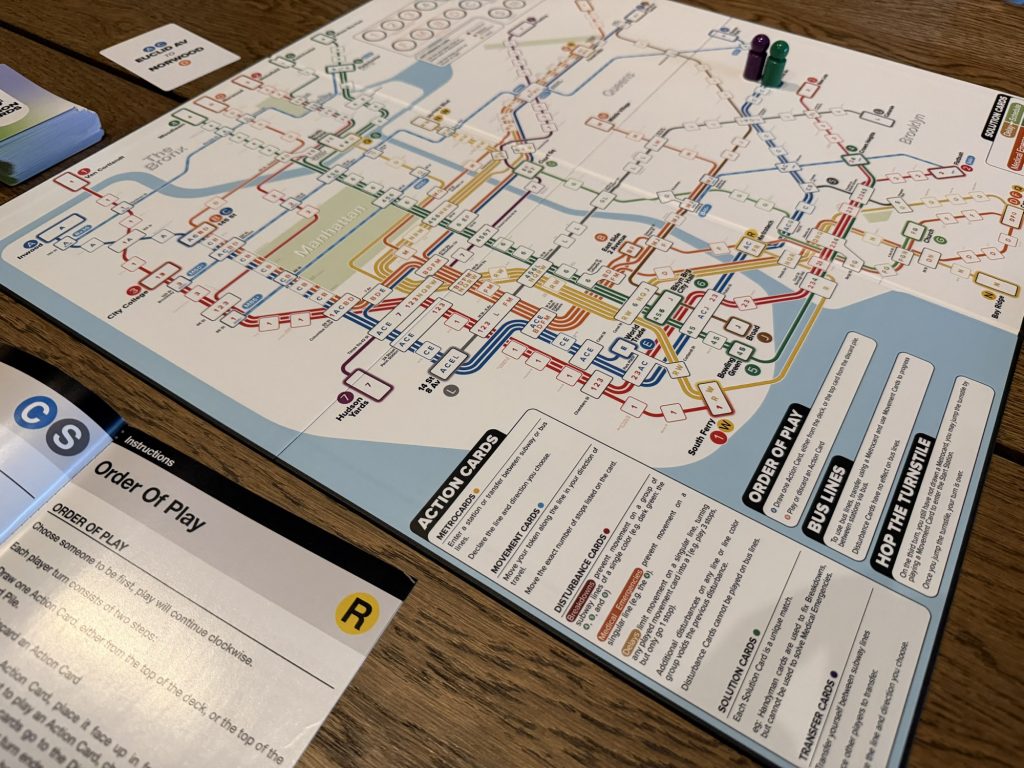
The premise is simple: you’re racing across New York City using its subway and bus lines, trying to reach your destination before everyone else. On your turn, you’re essentially drafting and playing cards to move around the map. Mixed in are sabotage cards that let you shut down subway lines and disrupt your opponents, along with cards that can help deal with those disruptions.
And that’s pretty much the game, which is part of why I like it so much.
There’s definitely a lot of luck involved. Sometimes you get exactly the cards you need, and sometimes the deck absolutely refuses to cooperate. If you’re looking for a game where the better strategist is always going to win, this probably isn’t that game.

But there’s something really satisfying about getting the cards you need and putting together a route across the city. Of course, that route rarely stays intact for long. Other players can shut down subway lines, forcing you to transfer or find another way to your destination. It’s a simple idea, but navigating the map and adjusting your route as things change is probably my favorite part of the game.

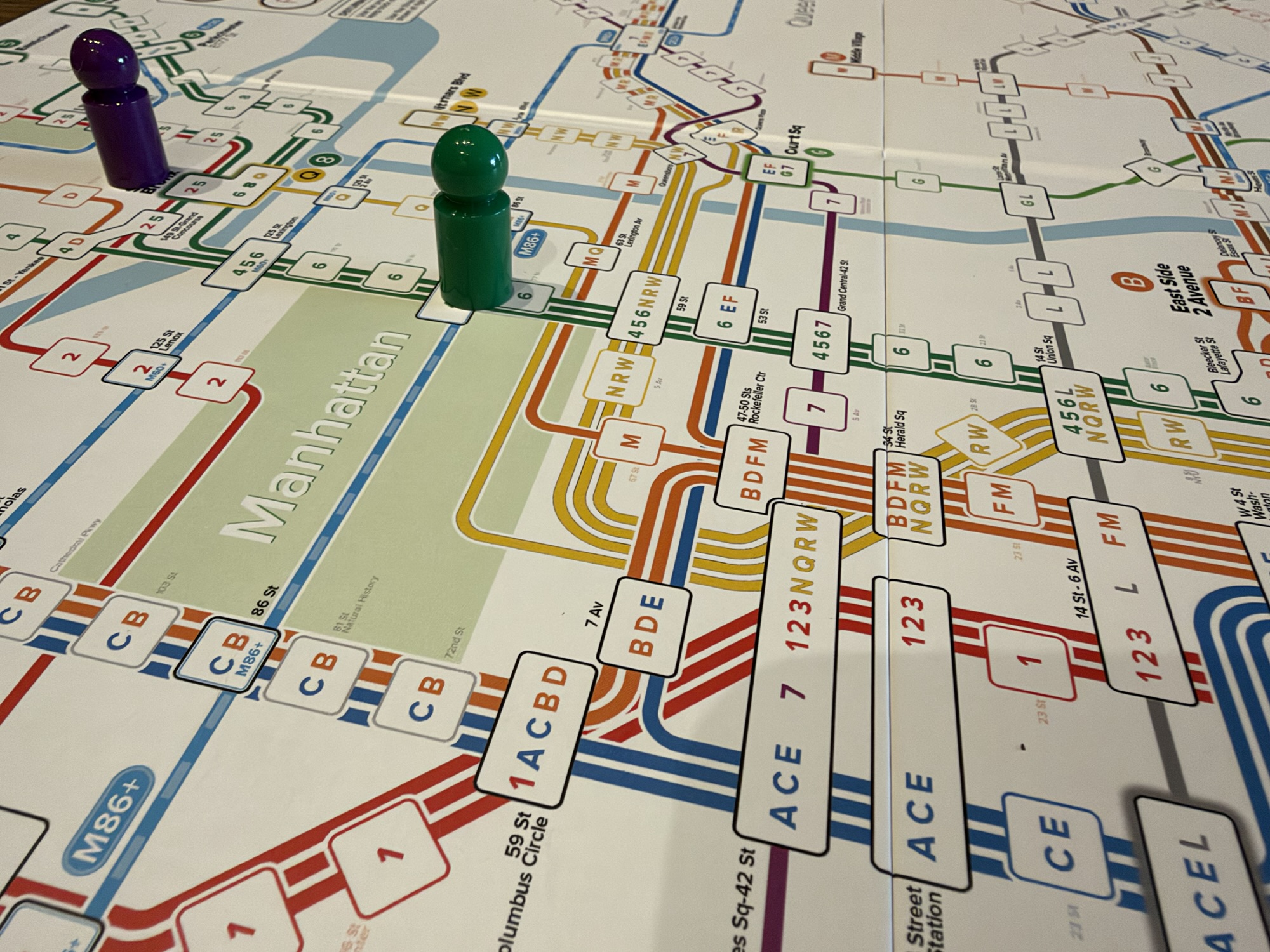
That’s where the theme really works for me. You aren’t just moving a piece along a generic track, the subway map is the game. Figuring out where to transfer and how to reroute makes navigating New York feel like part of the experience rather than just a theme pasted on top of a card game.
It also helps that the map is beautiful. There’s something inherently satisfying about watching your route develop across that familiar web of colorful subway lines.
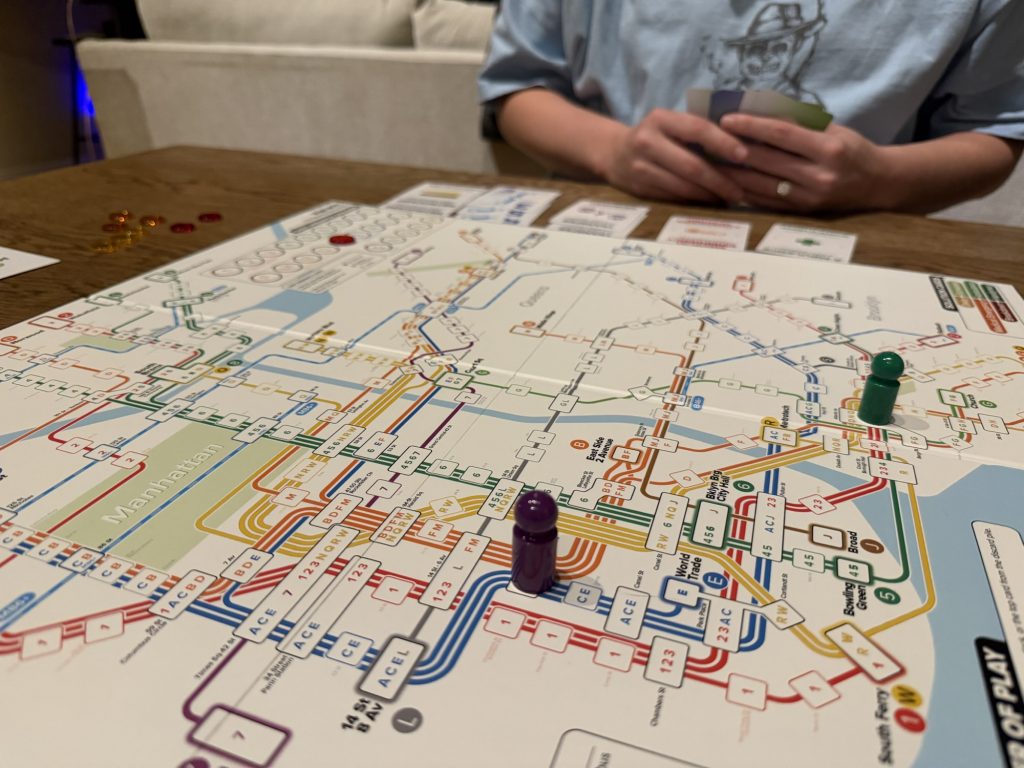
My wife and I have played this one 22 times in the last two weeks, and I think that says more about it than anything else. The games are quick, the rules stay out of the way, and there’s just enough interaction to make shutting down your opponent’s perfect route feel appropriately mean without turning the game into something overly competitive.
So no, Visit NYC isn’t a deep strategy game. It’s luck-heavy, simple, and sometimes the cards decide whether your carefully planned trip through Manhattan goes smoothly or completely falls apart.
But that’s also kind of the point.
It’s a race through the NYC subway system where things inevitably go wrong, you make a transfer, find another route, and keep moving.
And it’s just fun.
So far I’ve mostly played at two players with my wife, but after how much we’ve enjoyed it, I’d really like to get it to the table with a larger group. I have a feeling that adding more people, and more opportunities to completely ruin someone else’s commute, is where things could get especially entertaining.
Verdict: Visit NYC: The Subway Racing Game is simple, luck-heavy, and a lot of fun. The mechanics are easy to learn, the map is beautiful, and there’s something satisfying about piecing together a route, making transfers, and adapting when another player shuts down your line. It isn’t a game built around deep strategy, but it doesn’t need to be. The combination of racing, sabotage, and navigating the subway keeps it engaging without making it complicated.
Reviewed on 09/29/2026
Score Breakdown
| Category | Description | Score (1–10) |
|---|---|---|
| 1. Aesthetics & Components | Visual design, artwork, tactile quality, and overall presentation. | 7 |
| 2. Rules Clarity & Accessibility | Ease of learning, clarity of rulebook, setup time, and iconography. | 9 |
| 3. Strategic Depth | Amount of meaningful decision-making and long-term planning. | 5 |
| 4. Luck vs. Skill Balance | How fairly chance and skill coexist. | 5 |
| 5. Player Interaction | Engagement and social dynamics between players. | 8 |
| 6. Pacing & Downtime | Flow, engagement, and smoothness of play. | 9 |
| 7. Replayability | Longevity, variability, and continued appeal. | 9 |
| 8. Theme Integration | How well the mechanics and story fit the theme. | 8 |
| 9. Enjoyment & Emotional Impact | Pure fun factor—excitement, tension, satisfaction. | 9 |
| 10. Innovation & Uniqueness | Creativity, originality, and distinctiveness from other games. | 6 |
| Overall Mean Score | 7.5 / 10 | |