
Designers / Publisher / Year: Klaus-Jürgen Wrede / Z-Man Games / 2000
Player Count / Playtime: 2-5 Players / 30-45 mins
Genre / Type / Mechanics: Territory Building, Area Influence, Map Building, Pattern Building, Medieval, Family
Expansions: Inns & Cathedrals (2002), Traders & Builders (2003), The Princess & The Dragon (2005), The Tower (2006), Abbey & Mayor (2007), Count, King & Robber (2008), The Catapult (2008), Bridges, Castles & Bazaars (2010), Hills & Sheep (2014), Under the Big Top (2017)
Carcassonne is one of those games that has earned its place in the board game hall of fame. First published in 2000 and still as sharp as ever, it’s a tile-laying classic that manages to be immediately accessible while quietly rewarding those who pay attention.
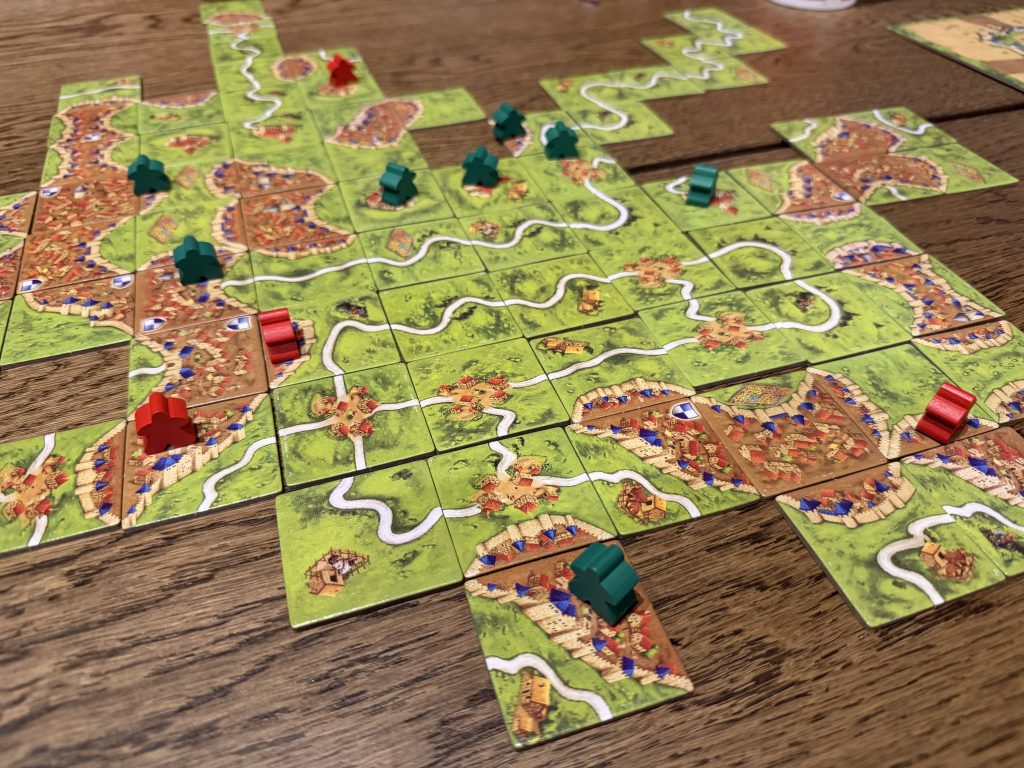
The premise is simple: draw a tile, place it to extend the growing medieval landscape, and decide where to commit your followers: knights in cities, monks in monasteries, thieves on roads, farmers in fields. Every decision is small, but the cumulative effect is a map that feels genuinely alive. One of the best things about Carcassonne is that every game produces a completely unique landscape. The tiles create something almost artistic each time, and there’s real satisfaction in watching the board take shape.
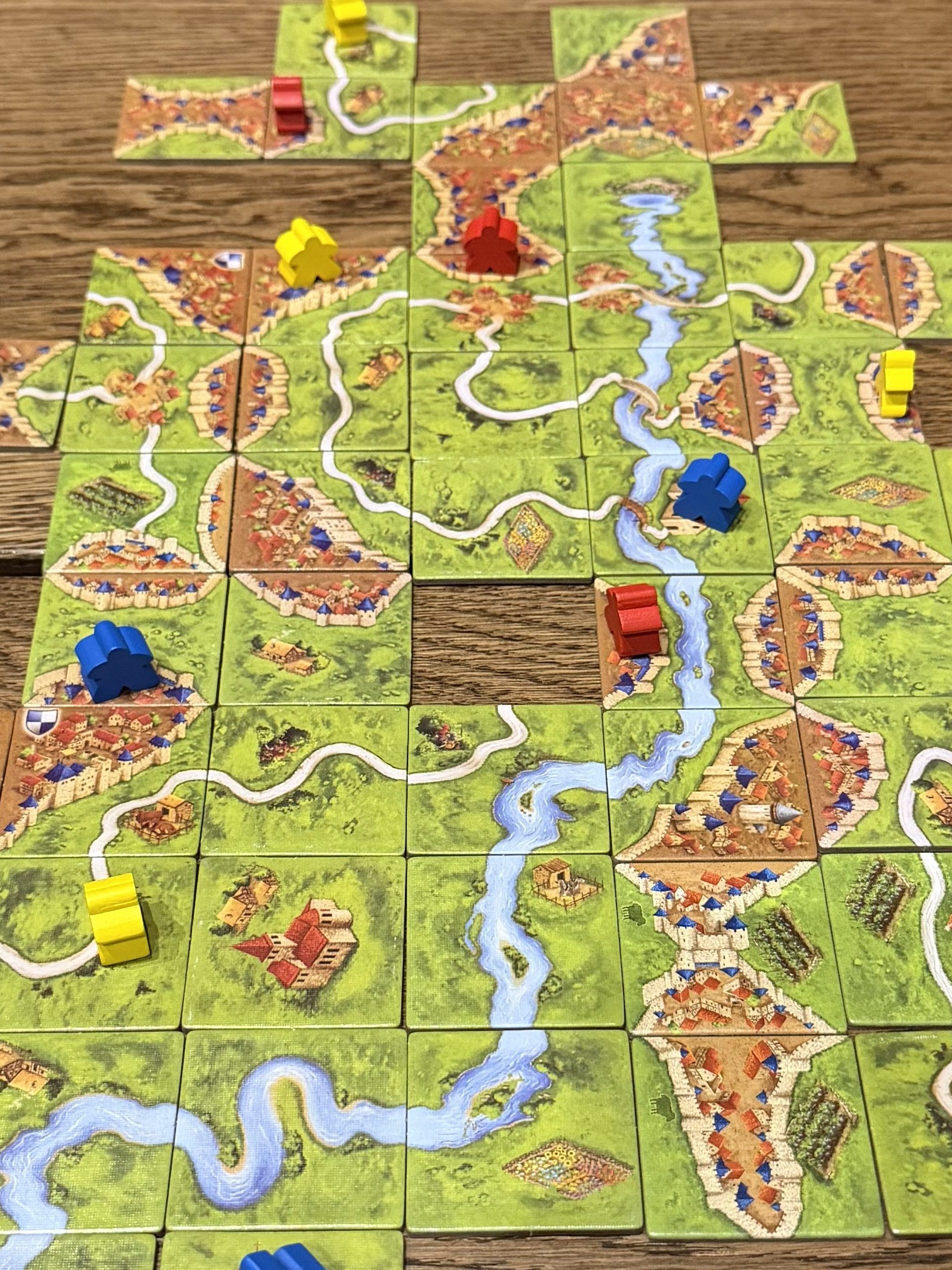
It’s also one of the easiest games to get to the table. Rules are taught in minutes, setup takes seconds, and the pace rarely drags. For a game that’s been around for over two decades, it still holds up remarkably well as a gateway title and a filler for experienced groups alike.
Where it stumbles slightly is in how much the tile draw can dictate your options. When the piece you need simply doesn’t come, there’s not much to be done. It won’t ruin a session, but it does cap the strategic ceiling.
That said, the base game is just the beginning. The sheer volume of expansions available means Carcassonne can grow with your group for years, adding new mechanics, regions, and complexity without ever losing its core identity.
Verdict: Carcassonne has stood the test of time for a reason. It’s quick, elegant, and endlessly expandable. A cornerstone of modern board gaming that belongs in every collection.
Reviewed on 05/07/2026
Score Breakdown
| Category | Description | Score (1–10) |
|---|---|---|
| 1. Aesthetics & Components | Visual design, artwork, tactile quality, and overall presentation. | 7 |
| 2. Rules Clarity & Accessibility | Ease of learning, clarity of rulebook, setup time, and iconography. | 9 |
| 3. Strategic Depth | Amount of meaningful decision-making and long-term planning. | 6.5 |
| 4. Luck vs. Skill Balance | How fairly chance and skill coexist. | 5 |
| 5. Player Interaction | Engagement and social dynamics between players. | 5 |
| 6. Pacing & Downtime | Flow, engagement, and smoothness of play. | 9 |
| 7. Replayability | Longevity, variability, and continued appeal. | 7.5 |
| 8. Theme Integration | How well the mechanics and story fit the theme. | 8 |
| 9. Enjoyment & Emotional Impact | Pure fun factor—excitement, tension, satisfaction. | 7.5 |
| 10. Innovation & Uniqueness | Creativity, originality, and distinctiveness from other games. | 9 |
| Overall Mean Score | 7.35 / 10 | |